Prices are estimates from typical local jobs and vary by home.
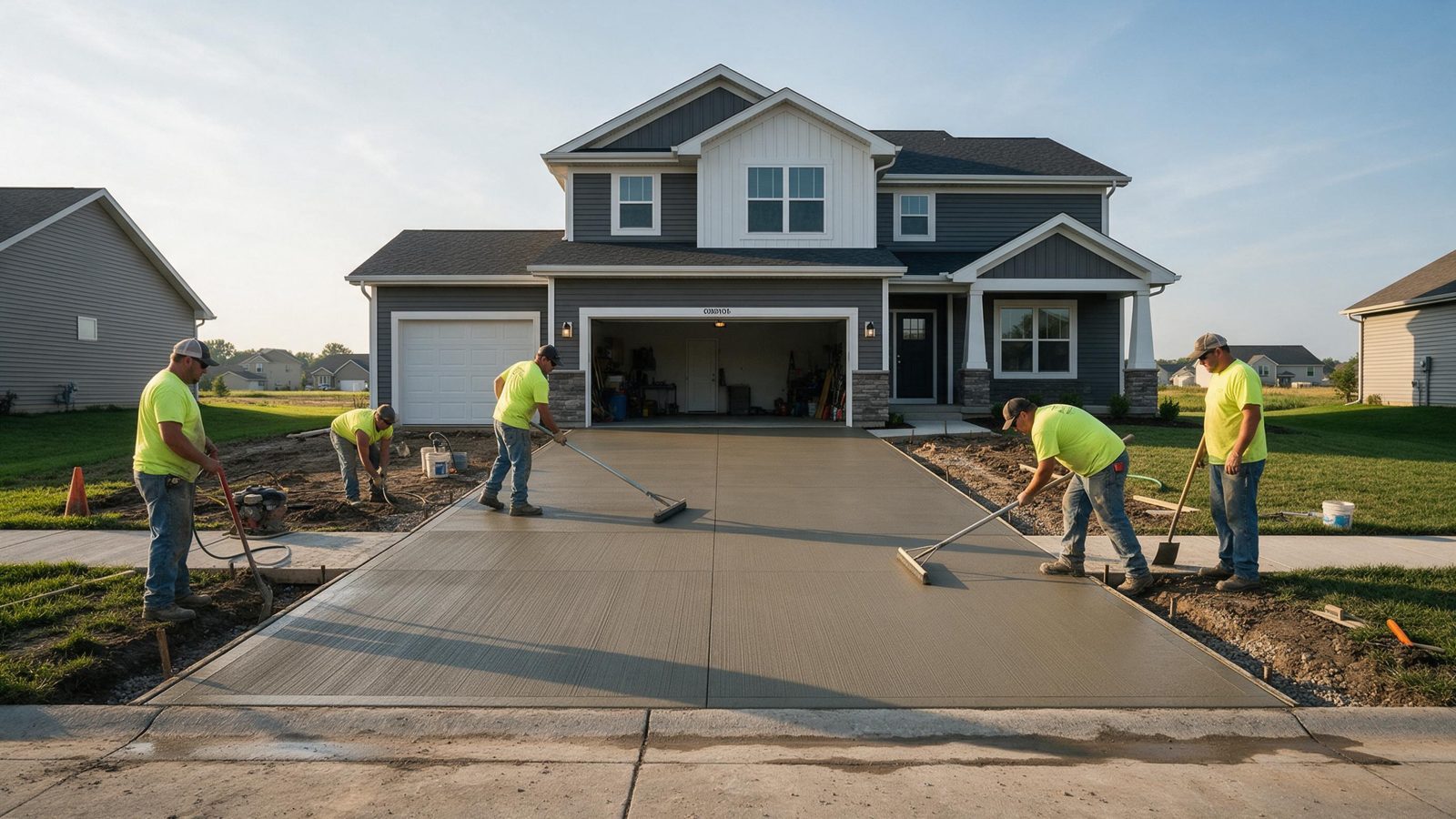
Freeze-thaw winters and road salt are tough on concrete in Coralville. We connect homeowners with local crews who pour driveways, patios and sidewalks built to handle Iowa weather, and repair the slabs that did not.
Call Get a free quote ShopConcrete looks permanent, but eastern Iowa puts it through a lot. Water seeps into tiny pores, freezes, expands and pops the surface apart, while de-icing salt speeds up the damage. Coralville also has plenty of clay soil and newer subdivisions where backfill around foundations can settle, leaving driveways and sidewalks cracked or tipped toward the house.
Homeowners in the 52241 ZIP code and the surrounding area can use this service to reach concrete contractors for new work and repairs. Some projects start from scratch, such as a wider driveway or a backyard patio. Others involve tearing out a cracked garage apron, replacing a heaved sidewalk panel or leveling a sunken step. Sharing measurements and photos helps a pro give a realistic estimate.
Long-lasting concrete comes down to what happens before the pour: a compacted gravel base, proper slope so water runs away, reinforcement suited to the load and control joints that let the slab crack where it is supposed to. Air-entrained mix is standard for exterior work in Iowa because it holds up much better to freezing.
A good concrete estimate lists the square footage, thickness, base preparation, reinforcement, finish, removal of old concrete and any city permit needed for work in the right of way, such as a driveway approach or public sidewalk. Ask about curing and sealing too, since the first few weeks have a big effect on how the surface holds up.

A crew can tear out a cracked or sunken driveway, regrade the base and pour a new slab sized for cars and trucks. Wider driveways and extra parking pads are common add-ons in Coralville neighborhoods.
A concrete patio gives you a solid spot for a table, grill or fire pit. A pro can help with shape and size, add a broom, exposed aggregate or stamped finish, and slope it so rain drains away from the house.
Front walks, side paths and steps take a beating from salt and shovels. A contractor can replace damaged panels, rebuild steps and add a handrail where it helps.
The apron where the driveway meets the garage often cracks first. A crew can replace it, repair the garage slab and address drainage so meltwater does not puddle inside.
Stamped patterns and colors can mimic stone or brick at a lower cost. Ask how the finish will hold up to salt and how often it should be resealed to stay looking sharp.
Surface sealing protects newer concrete from salt and water. For slabs with small cracks or minor scaling, a pro can explain whether repairs, resurfacing or replacement is the better long-term choice.
This site is only for concrete in Coralville, IA and nearby towns. We connect you with a pro who works in the area.
Share your town, what you need and how soon. There is no cost to ask and no obligation.
The costs, steps and questions on this page are general guides, so you know what to ask before you hire.
Ask any pro for a written estimate that lists the work, materials and timeline before the job starts.
Mark trip hazards on walks and steps so guests and delivery drivers see them, and avoid using rock salt on concrete less than a year old. Calcium magnesium acetate or sand is gentler.
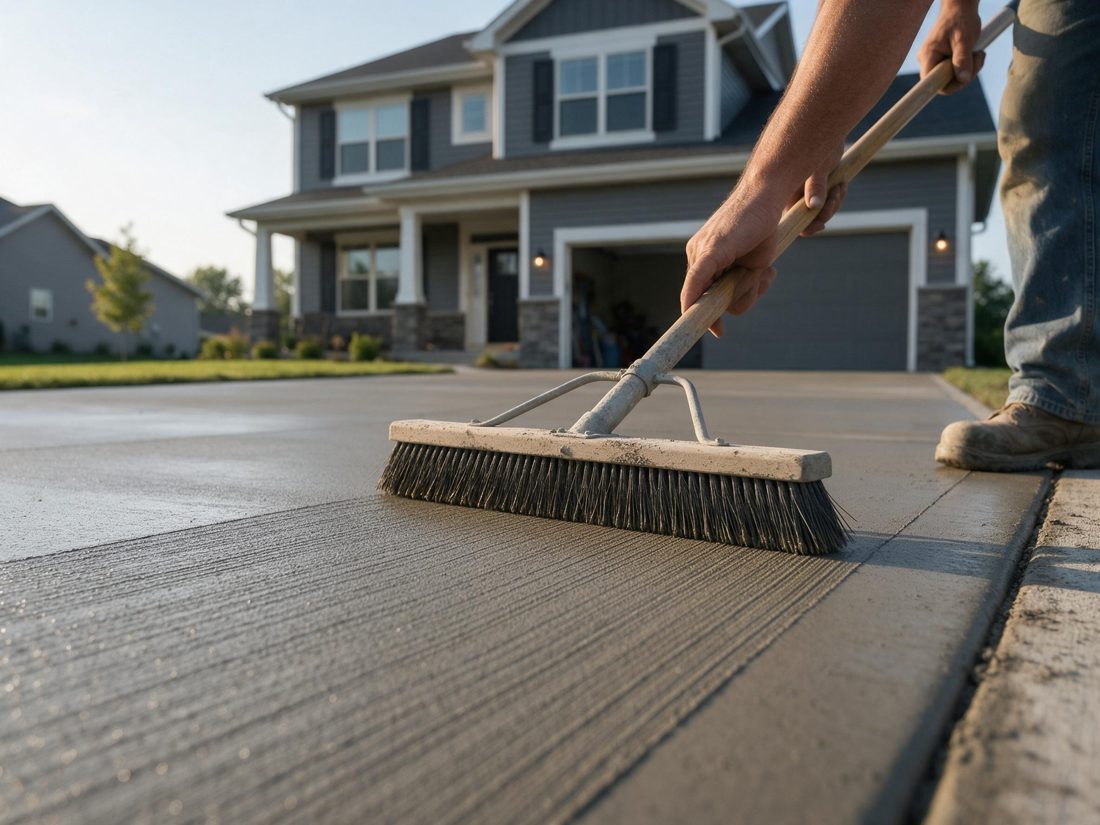
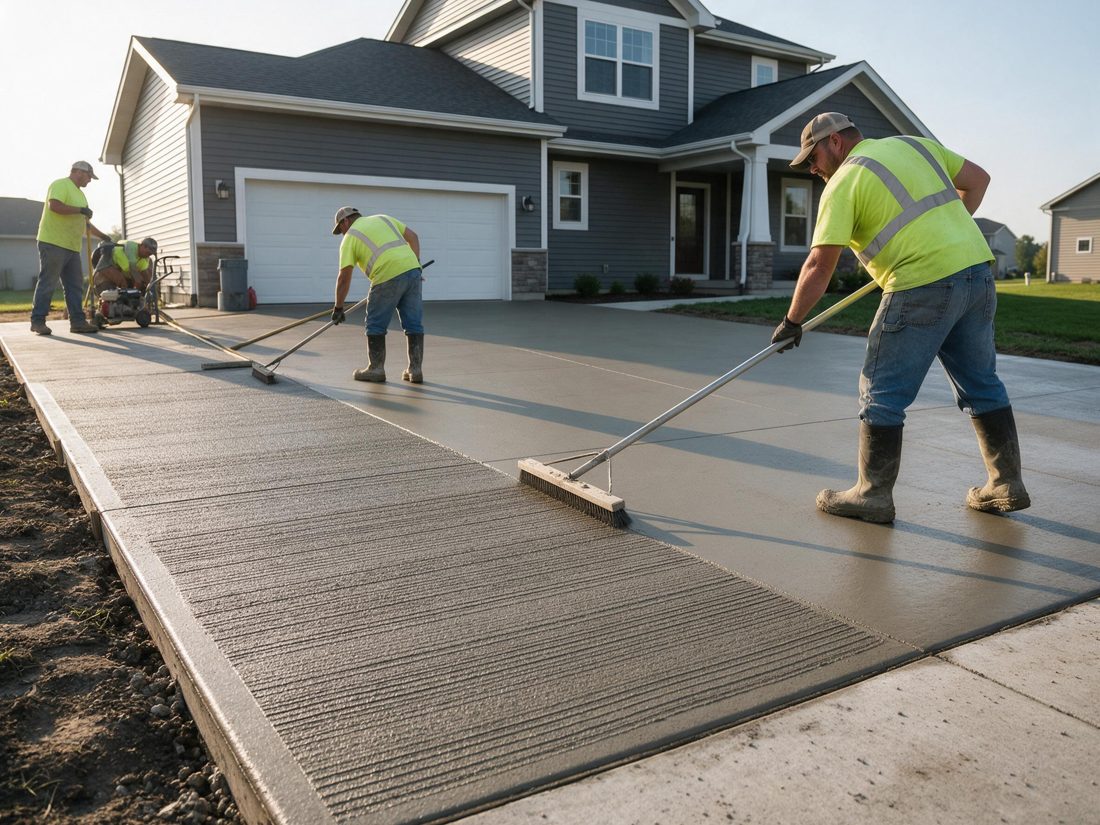
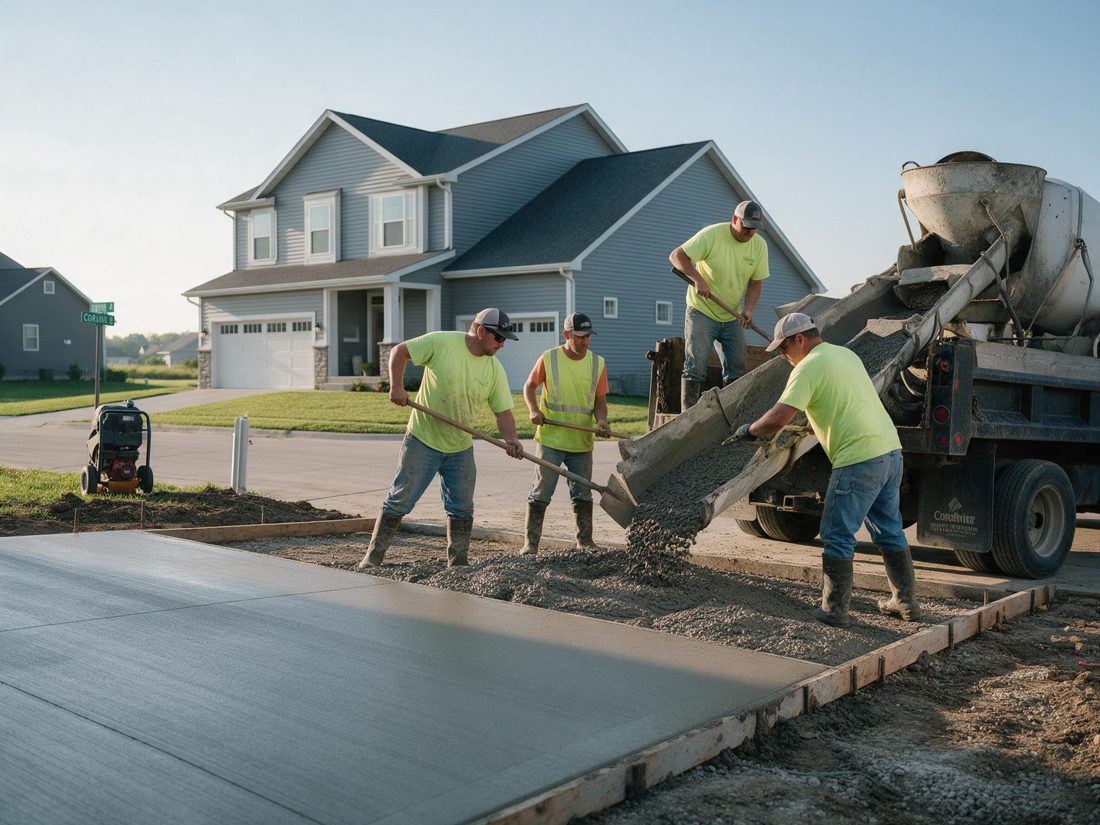
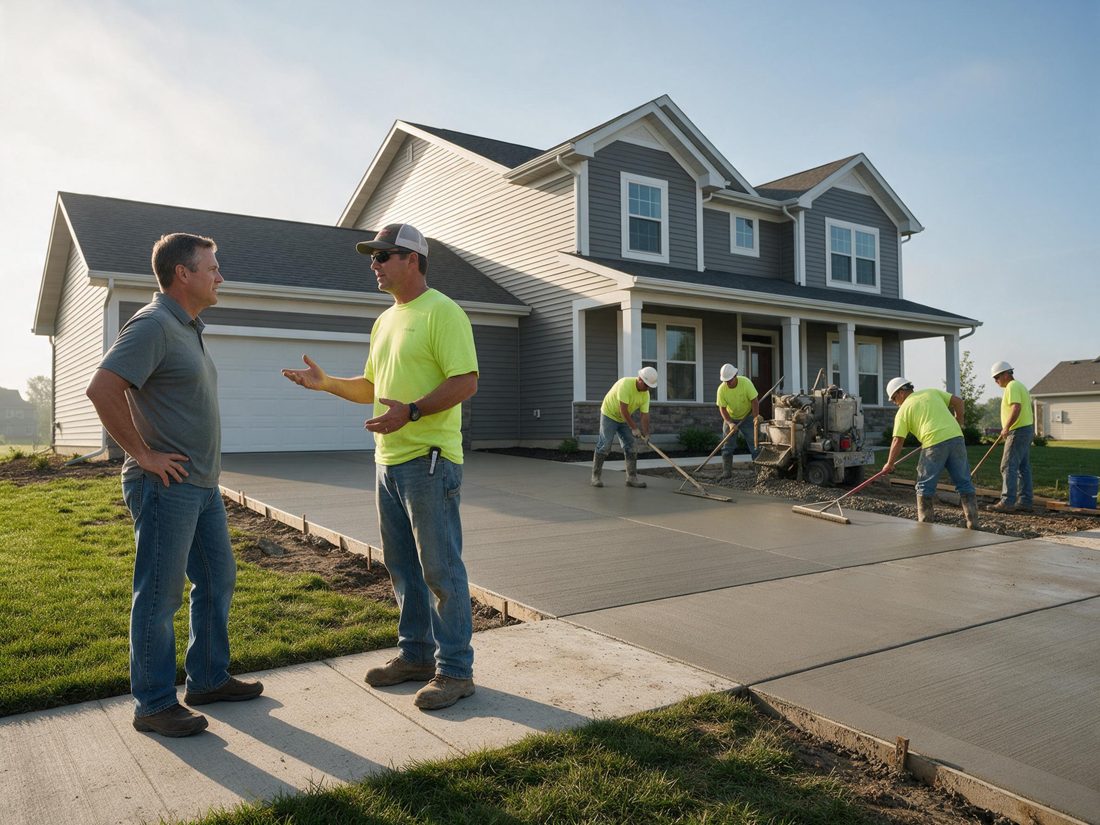
Plain broom-finish concrete typically runs $8 to $14 per square foot installed in the Iowa City and Coralville area, including base preparation. A typical two-car driveway replacement often lands between $6,000 and $12,000, depending on size, thickness and removal of the old slab.
Patios usually cost $10 to $18 per square foot for standard finishes, and stamped or colored concrete can run $15 to $25 per square foot. Sidewalk panel replacement and small repairs are often priced per panel or as a minimum trip charge.
Removing old concrete, hauling it away and fixing a poor base add to the price but make a real difference in how long the new work lasts. Ask the crew to show those items separately so you can see what you are paying for.
Seal exterior concrete every two to three years, ideally in late summer or early fall before salt season. A penetrating sealer helps keep water and chlorides out of the surface and slows scaling.
Shovel snow promptly instead of letting it pack into ice, and use sand or a concrete-safe ice melt. Keep downspouts and sump discharge from running across driveways and walks, where the water refreezes and works into cracks.
Schedule new pours between late April and October when temperatures are reliable. Concrete poured in cold weather needs blankets and extra care to cure properly, so ask how the crew handles a cold snap.
When comparing bids, check thickness, reinforcement, base depth and the concrete mix on each one. Ask for local references and whether the crew handles the City of Coralville permit for driveway approaches. A contractor who regularly works in Coralville, North Liberty and Iowa City knows the local soils and inspection requirements.
Local crews often work in Iowa City, North Liberty, Tiffin, Oxford, University Heights and Swisher too. Share your address and project details to see if a pro serves your location.
Most Coralville concrete sits on wind-blown loess and glacial clay. Both hold water, and clay swells when wet and shrinks when dry, which is why slabs here can heave in spring and settle in a dry August. In newer subdivisions, driveways and walks are often poured over backfill that was placed against new foundations. If that fill was not compacted well, it keeps settling for years, and the slab beside it tips toward the house.
Low ground along the Iowa River is another story. The Coralville Strip flooded in 1993 and again in 2008, when water came over the emergency spillway at the Coralville Reservoir. Concrete that sat under floodwater can lose the soil beneath it as the water drains away, leaving hollow spots that crack under the next car. If your property flooded, have the base checked before you repair the surface.
A crew that knows these soils will dig out soft material, compact a proper gravel base in layers and pay close attention to slope. Water should always run away from the house, toward the street or a lawn area that can absorb it.
Measure how you actually use the space. A two-car driveway that also has to hold a work truck, a boat trailer or a basketball hoop may need to be wider, thicker or reinforced differently than a basic slab. For patios, lay out your table, grill and walking paths with a garden hose or string before you settle on a size. Patios almost always end up feeling smaller than people expect once the furniture is on them.
Think about where the water from the roof and the yard will go. A new patio can block a natural drainage path, and a downspout that used to spill onto grass may now dump onto concrete. Ask the contractor to plan around gutters, sump discharge lines and window wells. A slope of about a quarter inch per foot away from the house is a common target for patios and walks.
Finally, decide on the finish. A broom finish gives the best traction on ice. Exposed aggregate hides wear and dirt well. Stamped concrete looks great on a patio but can be slick when wet or icy, so many homeowners keep it off the main walk to the front door.
Not every cracked slab needs to come out. Thin, tight cracks that are not getting wider are often just shrinkage, and sealing them keeps water and salt out. A panel that has sunk but is still in one piece can often be raised with polyurethane foam or grout, which is quicker and creates less mess than tearing it out. Lifting works best when the slab is sound and the cause of the settling, such as a downspout or washout, gets fixed at the same time.
Replacement makes more sense when the surface is badly scaled or spalled, when a slab is broken into several pieces, or when the base underneath has washed out. Patching a scaled driveway with a thin topping rarely lasts through many Iowa winters, because freeze-thaw cycles pop the topping loose.
Ask the contractor to explain why they recommend one approach over another and what they expect it to last. A good pro will tell you when a cheaper fix is enough.
One of the most overlooked spots on any Coralville property is the gap where a driveway, patio or walk meets the foundation. When that joint opens, rain and snowmelt run straight down along the basement wall. Over time that water can lead to damp basement walls, washout under the slab and more settling.
Sealing the gap is simple maintenance. A crew cleans out the joint, adds foam backer rod and fills it with a flexible polyurethane sealant that moves with the concrete through the seasons. The same treatment works on control joints in large slabs where weeds or water get in. It is worth checking these joints every spring, after the snow melts, and resealing them every few years.
If the slab has already tipped toward the house, sealing alone will not stop the water. Lifting or replacing the slab to restore the slope away from the foundation is the lasting fix.
Four inches is common for passenger cars, while five or six inches is a better choice for heavier trucks, RVs or areas that see delivery traffic. Ask the contractor what they recommend for your use.
Most crews suggest staying off a new driveway with vehicles for about seven days, and longer for heavy trucks. Foot traffic is usually fine after a day or two.
Concrete shrinks as it cures and moves with temperature changes. Control joints guide those cracks into straight lines. Random cracks often point to a weak base, missing joints or heavy loads.
Sometimes. Slab lifting with foam or grout can level some sunken panels for less than replacement, as long as the concrete itself is in decent shape.
Work on a driveway approach or public sidewalk usually needs a city permit. Many contractors handle it, so confirm who is responsible before work starts.
Tell us where the home is, what you are seeing and how soon you need help. We can connect you with a nearby pro in the Coralville area to talk through the job and next steps.
No obligation and no pressure.